

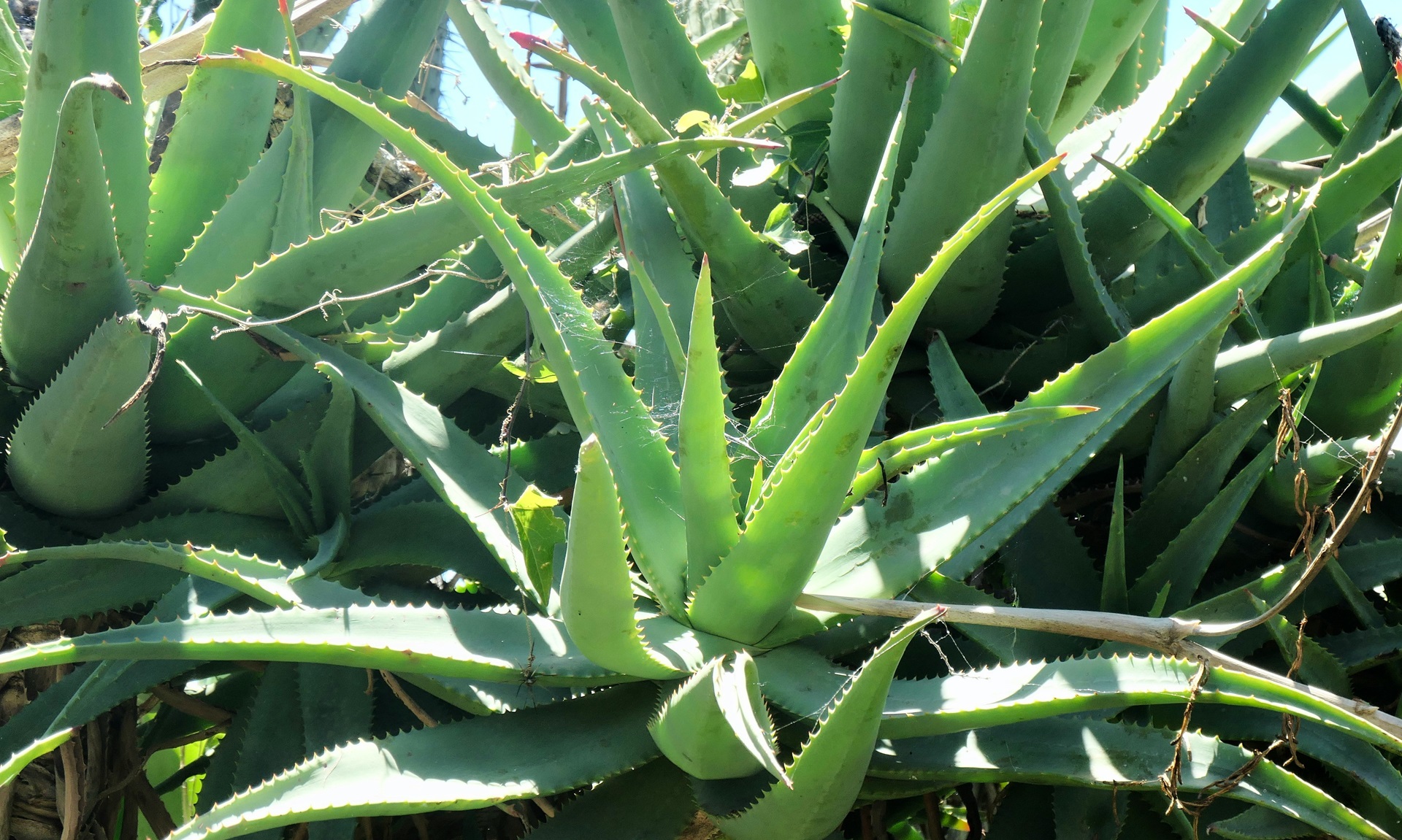

Aloe vera is more than just a household succulent—it’s a powerful natural remedy packed with healing benefits. Thriving in hot, dry climates, aloe vera is believed to have originated from South Africa or Arabia and now grows widely in subtropical regions, including India and the southwestern U.S.
For centuries, aloe vera has been used to treat skin problems and promote healing. Even in ancient Greece, sap was traded as medicine for wound care and was even believed to prevent graying hair. Today, thanks to modern science, aloe vera is now a key ingredient in skincare and wellness routines worldwide.
The contents of aloe vera

Aloe vera belongs to the succulent family and can grow up to five meters tall. Its leaves are grayish-green with thick flesh. A single leaf contains more than 75 active compounds, including enzymes, amino acids, vitamins, minerals, and 99.5% water. With such a rich composition, it’s no wonder it’s has long been used as a natural remedy.
Today, thanks to advancements in science and technology, aloe vera has found expanded uses and is now formulated into skincare and cosmetic products. In 2006, a scientific study showed, when applied once daily in cosmetic form for 1 to 2 consecutive weeks, could improve skin hydration.
Another study also highlighted the scientifically proven benefits of aloe vera in skin repair. Its use has been shown to help reduce the appearance of wrinkles and visible signs of aging.
Benefits for the body and skin
For centuries, aloe vera has been renowned for its skin-healing properties. Known as a timeless remedy with soothing, calming, and moisturizing effects, its incredible benefits have been praised for thousands of years.
The rich array of nutrients in a single leaf can penetrate the epidermis (the outermost layer of the skin) and work deeply to restore hydration, reduce redness, protect against transepidermal water loss, and immediately soothe irritation.
Thanks to its nutrient-rich composition is highly effective in calming itchy, red, or irritated skin caused by insect bites. In addition, its gel accelerates the healing process of minor wounds, scrapes, or light burns by promoting skin cell regeneration.
Aloe vera is also well-known for delivering deep hydration without leaving a sticky residue. And due to its antibacterial and anti-inflammatory properties, the gel can also help reduce acne and the redness that often comes with it.
Moreover, the healing power of aloe vera suits all skin types. Whether you have dry, sensitive, or combination skin, aloe vera can be an effective solution. Its healing effects can be even stronger when combined with other anti-inflammatory ingredients.
Not just for topical use, aloe vera can be consumed

Many people are unaware that aloevera can be consumed. The gel from the plant is safe to eat and provides a refreshing taste to various foods and drinks. Here’s how to prepare it:
- Peel the aloe vera leaf.
- Cut off the top and thorny sides.
- Remove the white bottom part of the leaf.
- Slice along one side to expose the gel.
- Scoop out the gel with a spoon.
- Cut the gel into small cubes.
- Rinse the gel cubes to remove any dirt or bitter latex.
- The aloe vera cubes can be eaten directly.
- For a milder taste and softer texture, cook them by boiling or steaming.
Another magic
Aloe vera juice has long been known to support digestive health. It is effective in relieving symptoms of acid reflux, indigestion, and irritable bowel syndrome (IBS). By consuming aloe vera juice regularly, you can maintain overall gut health, promote regular bowel movements, and reduce discomfort in the digestive system.
Beyond skincare and digestion, it’s offers even more health benefits. Rich in antioxidants, it can help boost the immune system, regulate blood sugar levels, provide hydration, support weight management, and reduce inflammation.
Aloe vera truly lives up to its reputation as a multi-use healing plant. From hydrating and soothing the skin to improving digestion and supporting immunity, this humble succulent does it all. Whether used topically or consumed as part of your daily diet, aloe vera is a natural remedy your body—and skin—will thank you for.